How are PFAs regulated? Read below to find out!
Current Regulations on PFAs
Safe Water Drinking Act
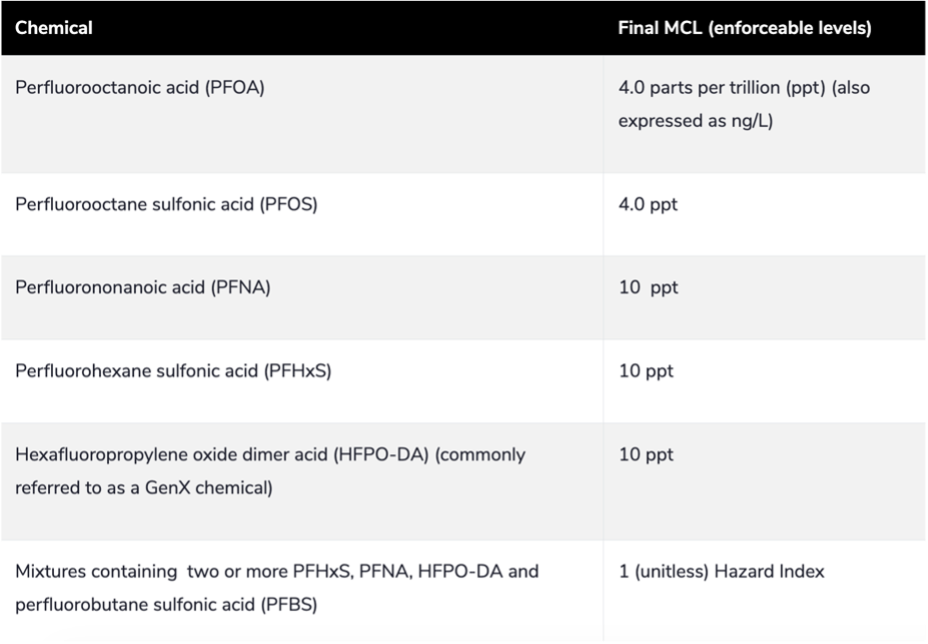
In April 2024, the “US EPA announced the final National Primary Drinking Water Regulations (NPDWR) for six Per- and Polyfluoroalkyl Substances (PFAS)” (Kibuye, 2025).
US EPA drinking water maximum contaminant levels (MCL) for PFAS:
How long will this take?
“These public water systems will have until 2029… to monitor their treated water and implement treatment solutions to lower PFAS levels in finished water if levels exceed the final MCLs” (Kibuye, 2025).
CERCLA (aka Superfunds)
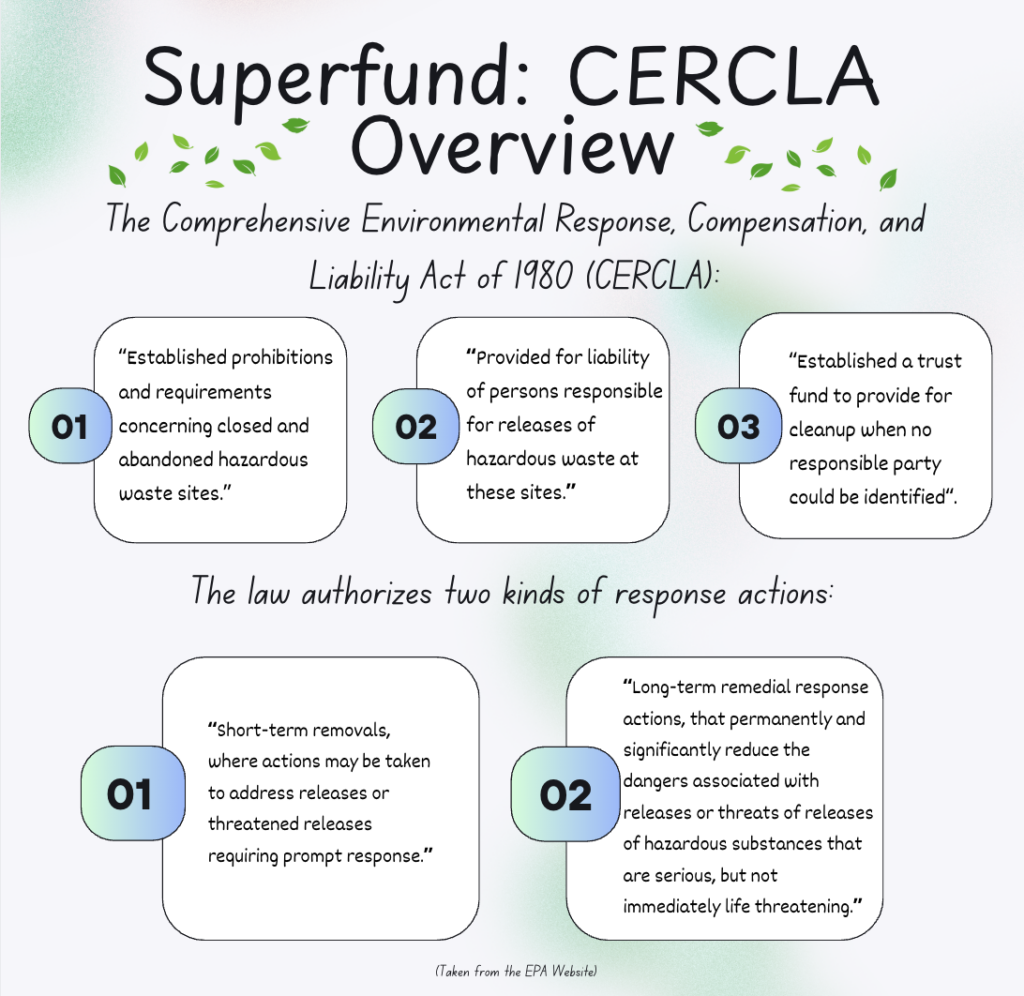
“The Comprehensive Environmental Response, Compensation, and Liability Act (CERCLA), commonly known as Superfund, was enacted by Congress on December 11, 1980” (EPA, 2025).
In April 2024, the “EPA designated two per- and polyfluoroalkyl substances —perfluorooctanoic acid (“PFOA”) and perfluorooctanesulfonic acid (“PFOS”), including their salts and structural isomers, as hazardous substances under section 102(a) of the Comprehensive Environmental Response, Compensation, and Liability Act (“CERCLA”)” (EPA, 2025).
Clean Water Act (CWA)
Established: 1972
What does it do?
According to American Rivers…
- “It sets water quality standards”
- “It regulates direct discharges into waterways”
- “It funds wastewater treatment facilities”
- “It calls out nonpoint source pollution”
- “It protects wetlands and aquatic river ecosystems”
This act is in danger, though!
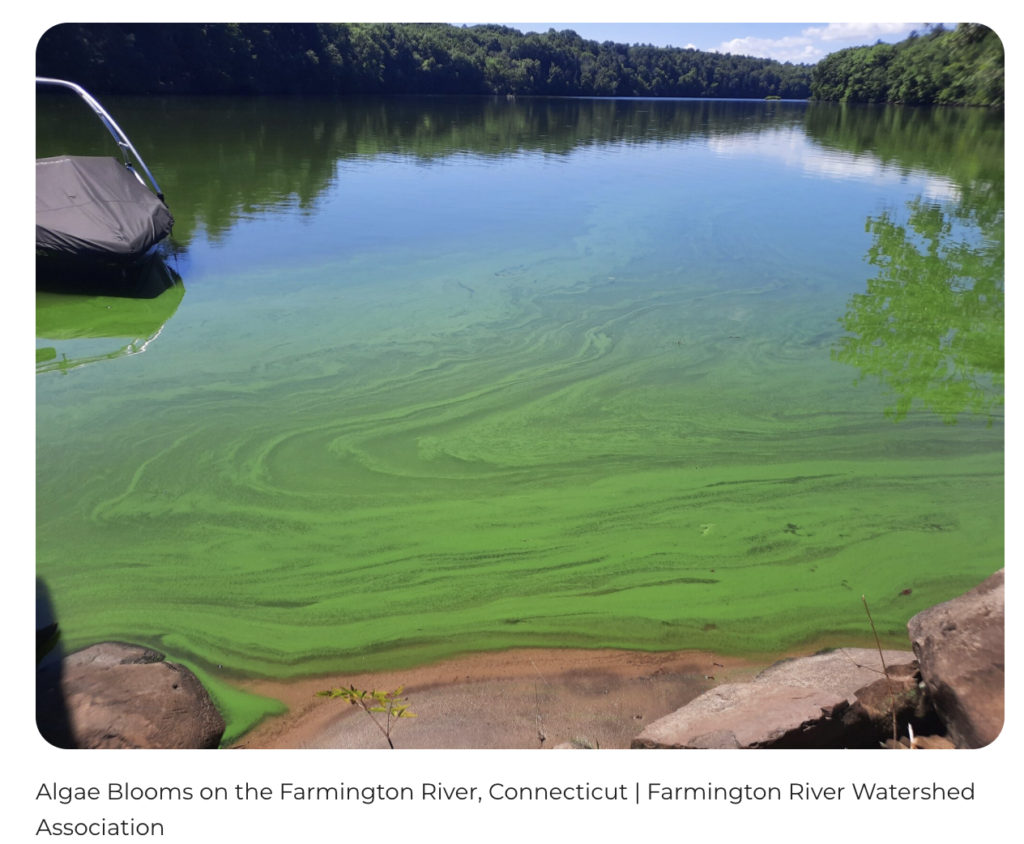
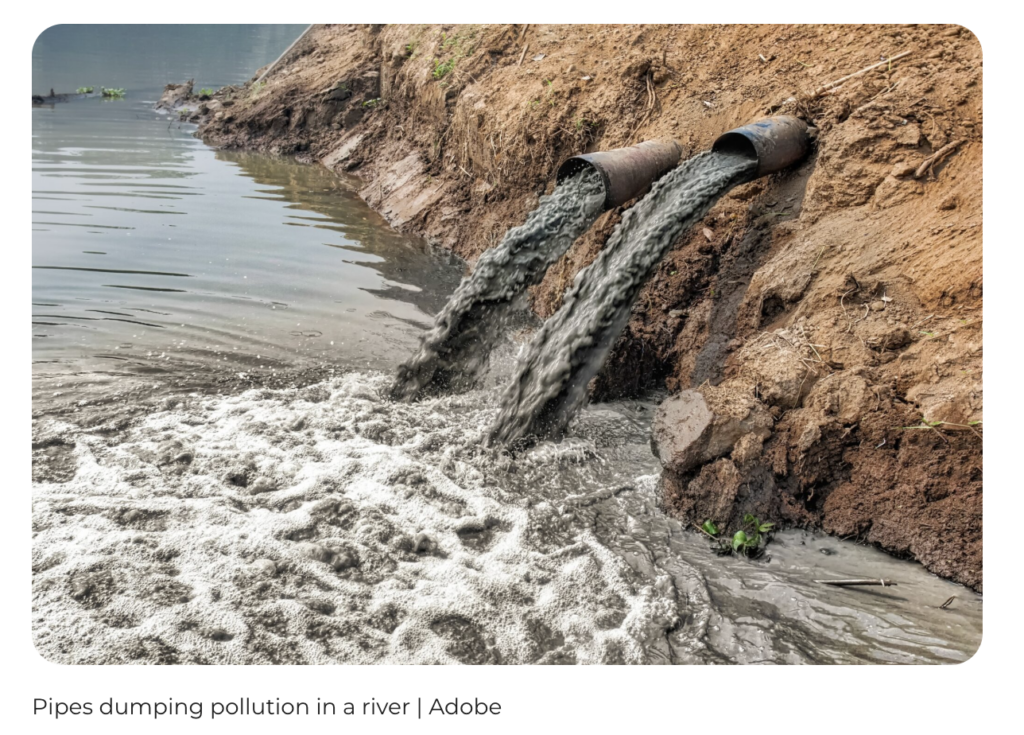
Image taken from American Rivers
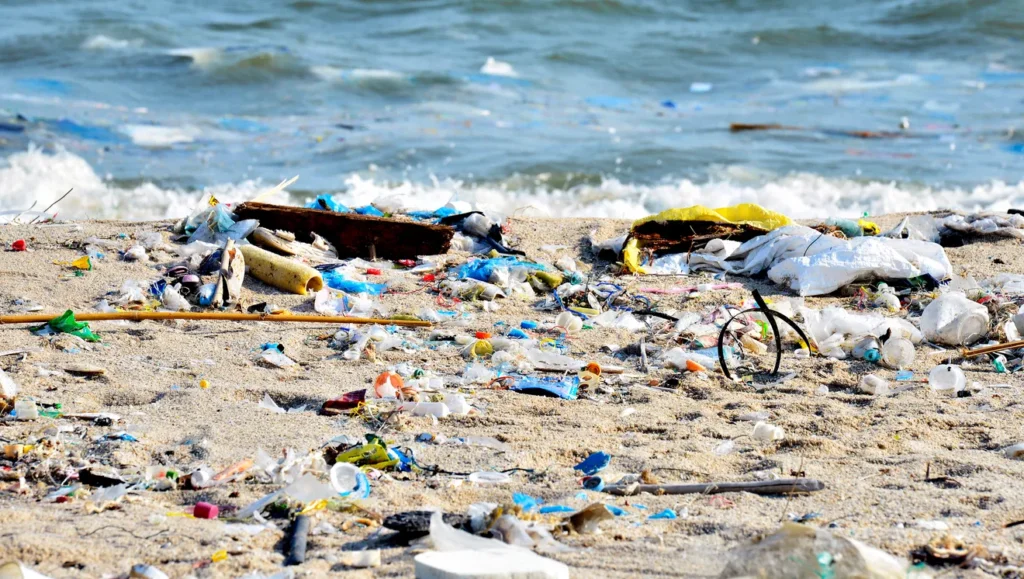
Image taken from Naples Daily News
The Toxic Substances Control Act (TSCA)
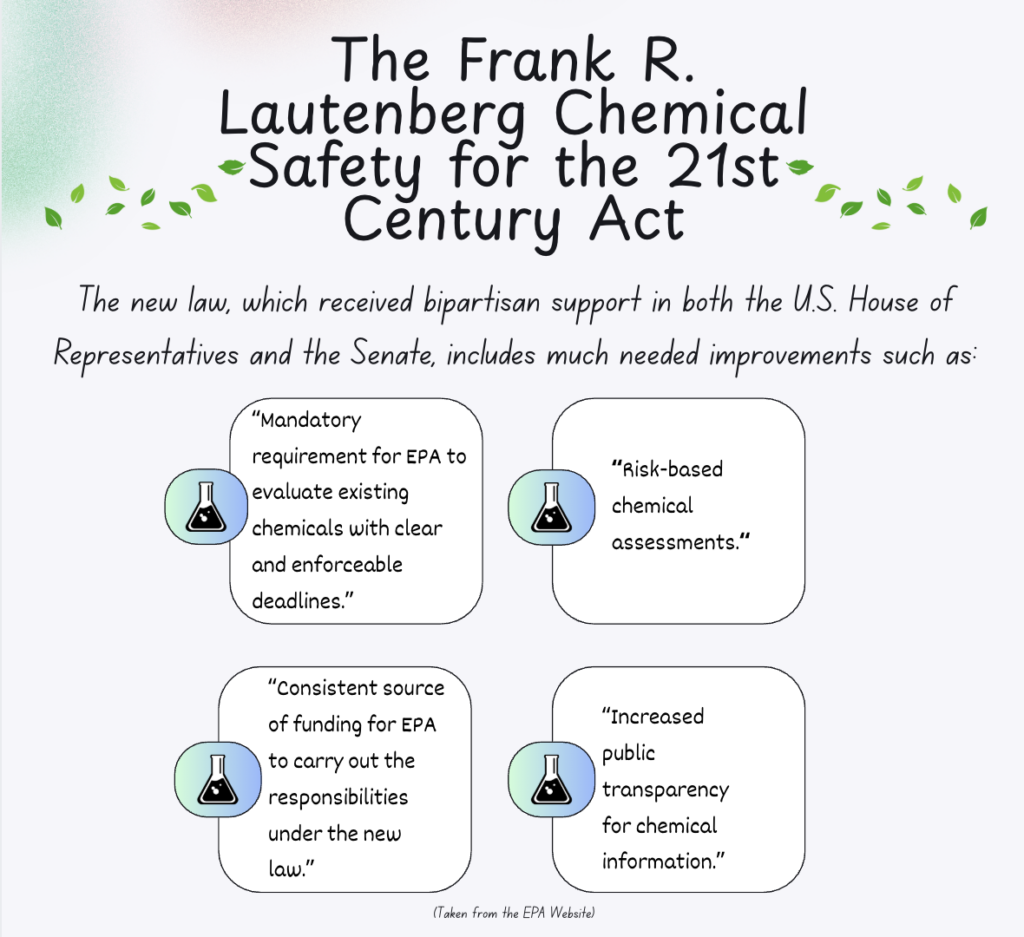
- In 2016, Obama signed the The Frank R. Lautenberg Chemical Safety for the 21st Century Act, significantly adding to the TSCA.
- According to EPA, “The Toxic Substances Control Act of 1976 provides EPA with authority to require reporting, record-keeping and testing requirements, and restrictions relating to chemical substances and/or mixtures. Certain substances are generally excluded from TSCA, including, among others, food, drugs, cosmetics and pesticides” (EPA, 2025).
- Some specific chemicals include: “ polychlorinated biphenyls (PCBs), asbestos, radon and lead-based paint” (EPA, 2025).
State PFA Policies
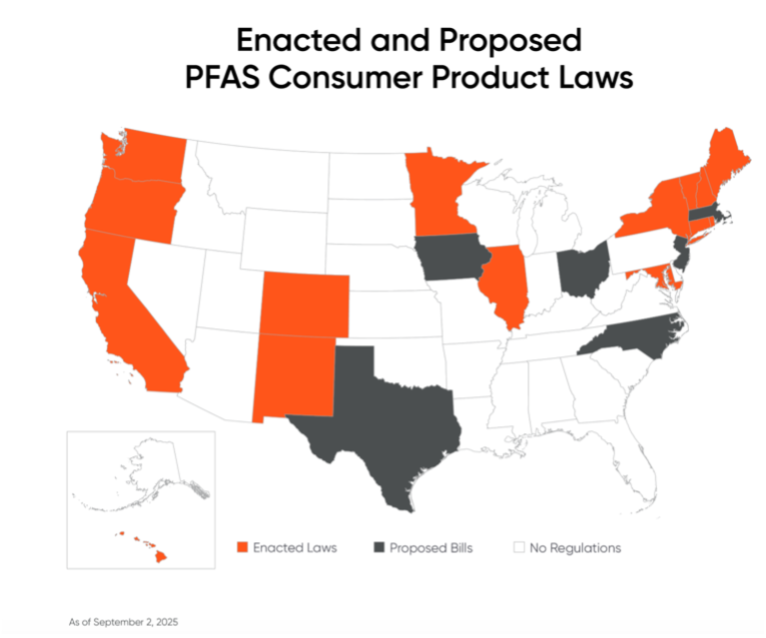
States have begun to enforce stricter regulations regarding PFAs, especially one state…
Maine!
“The following information identifies what specific product categories each state regulates” (BCLP, 2025).
Product Categories: children’s products, food packaging, pesticides, Carpets, rugs, and fabric treatments, Fertilizer and composting, Agricultural and Farm Products, Cleaning products, cookware, cosmetics, dental floss, juvenile products, menstrual products, ski wax, and more (BCLP, 2025).
They even have a goal to “Prohibit PFAS in all consumer products by 2032” (BCLP, 2025)! Let’s all try to get there too!
U.S. vs. E.U. Regulations
type here
Read more below!
*Information for this website was taken from the sites below
https://www.epa.gov/superfund/superfund-cercla-overview
https://www.epa.gov/laws-regulations/summary-toxic-substances-control-act
https://extension.psu.edu/epa-finalizes-drinking-water-standards-for-six-pfas
