Casey Erickson & Shannon Ray
How PFAS Enter the Body
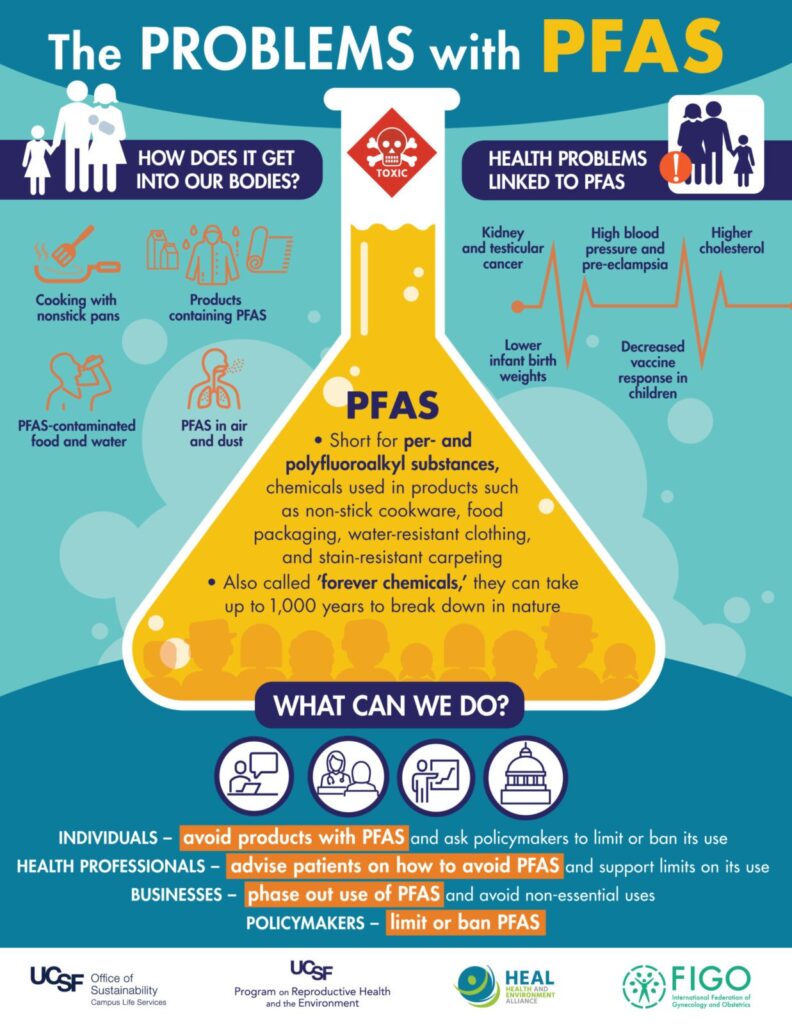
PFAS can enter the human body through four main pathways of exposure: drinking water, food and packaging, household products, and occupational exposure.
Drinking Water
PFAS can contaminate groundwater and public water systems through industrial discharge, landfill spillage, or even firefighting foam. Since PFAS can not break down easily, they accumulate in water supplies over time and can lead to ingestion.
Food & Packaging
Food that has been grown or processed in a contaminated environment is subject to PFAS exposure. Crops irrigated with polluted water and fish from contaminated waters are more likely to have higher levels of PFAS. Grease-resistant food packaging, like fast-food wrappers, also contains PFAS and allows for the chemicals to enter the food.
Household Products
Many household products have been manufactured using PFAS to make items water-resistant and stain-resistant. Items such as non-stick cookware (Teflon), stain-resistant clothing, waterproof clothing, cleaning products, and certain cosmetics. With the use of these products, PFAS can be ingested over time.
Occupational Exposure
Individuals working in industries that manufacture or use PFAS are at higher risk for exposure. This includes people like firefighters, employees at manufacturing facilities, and chemical plant workers. From working in such industries, exposure often occurs through inhalation of contaminated air or direct contact with material containing PFAS.
Health Effects Linked to PFAS Exposure
Immune system
PFAS may weaken the immune system and can reduce the body’s response to vaccines, increasing the susceptibility to infections. This can be even more of a concern for children, as their immune systems are still developing, and older people, as their immune systems may be more compromised.
Cardiovascular & metabolic
Exposure to PFAS has been associated with higher cholesterol levels. Long-term exposure to PFAS may also increase the risk of hypertension and other heart conditions. With high cholesterol being a major risk factor for heart disease, PFAS may even be linked to heart disease and other health implications.
Reproductive & development
PFAS exposure during pregnancy has been linked to developmental delays, low birth weight, and other pregnancy complications like preeclampsia. PFAS may even interfere with hormone regulation, which can negatively impact fertility and reproductive health in both males and females.
Cancer
Studies have shown that higher blood levels of certain PFAS have been linked to kidney and testicular cancers. Other studies have examined breast, ovarian, bladder, and prostate cancers, and while some showed a connection between PFAS and the type of cancer, more research is still needed on the topic.
Who is Most at Risk?
Individuals with immunocompromised systems have less of an ability to ward off harmful chemicals, leaving children, pregnant women, and older adults to deal with harmful, potentially life-threatening risks.
Risk in Adolescence
It’s not surprising that children and adolescents are at greater risk of exposure due to their tendency to explore with their mouths, thereby ingesting PFAS chemicals as they come into contact with them.
Studies show that children exposed to PFAS are at risk of developmental delays, including disrupted brain development, motor or language delays, and, in some cases, an increased risk of learning disabilities, such as ADHD.
Research posits that exposure to PFAS during adolescence may increase the risk of children getting metabolic liver disease by over three times, negatively impact the hormone and energy regulation of children and adolescents.
Risks in utero
The health risks associated with PFAS exposure begin in utero, increasing the risk of obesity and high blood pressure in children later in life.
The following video details a study from the Journal of the American Heart Association that examines the risks of prenatal exposure to PFAS.
Findings suggest that exposure is associated with an increased risk for high blood pressure later in childhood, especially among boys, according to researchers.
Risks in Late Adulthood
Exposed individuals in their late adulthood are at risk of bioaccumulation, meaning they eliminate PFAS from their bodies at a decreased rate.
PFAS exposure was also associated with individuals aged 50-64, suggesting an accelerated biological aging metric.
The examination of if/how PFAS are related to dementia or cognitive decline in older individuals has been explored by The Journal of the Alzheimer’s Association and The University of Miami.
How to Reduce Your Exposure to PFAS
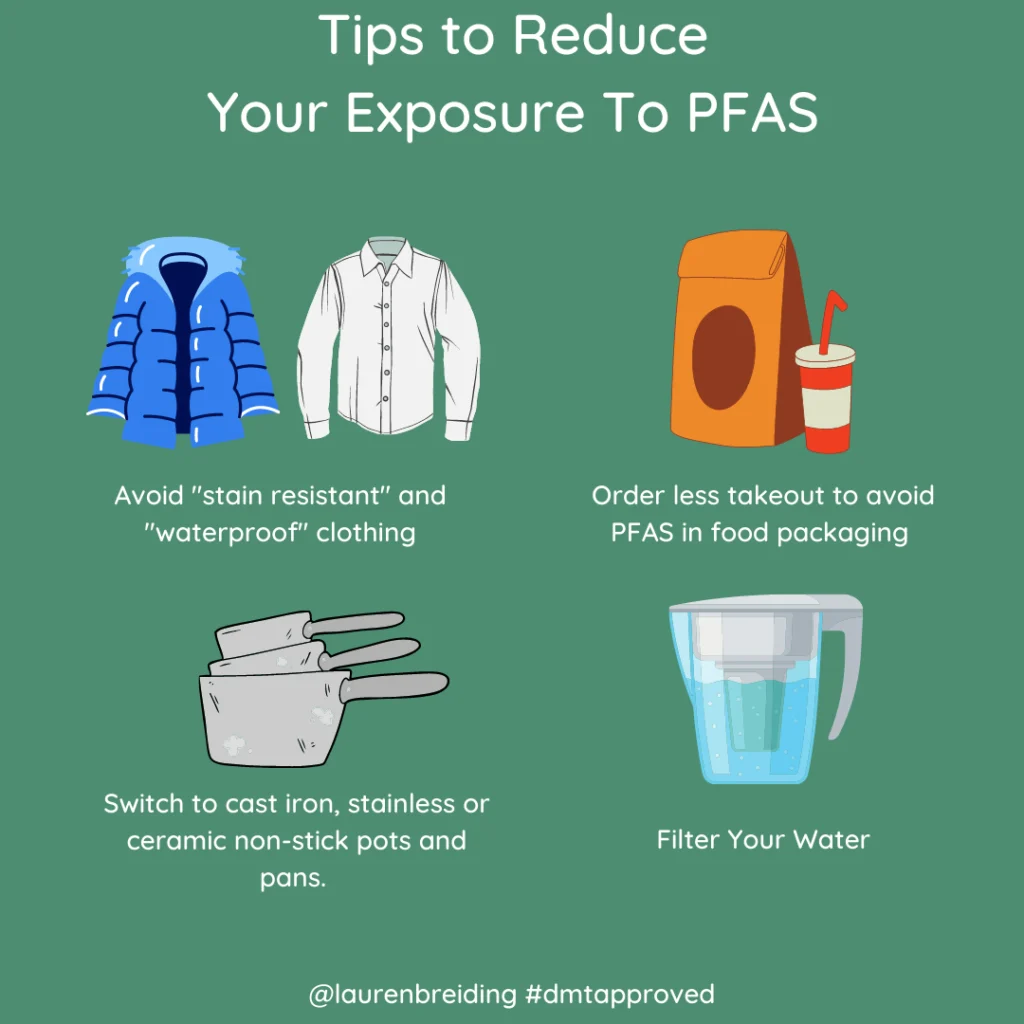
Below is a list of steps you can take to limit your exposure to PFAS, based on the four main pathways detailed above.
Overall, the most effective change occurs when policy changes are enacted. You can get involved in your community by requesting that water utilities test for PFAS and by supporting local and state policies that limit PFAS use and contamination.
Several states are banning PFAS in consumer products and packaging.
For instructions on reducing exposure, sourced directly from the PFAS Research, Education, and Action for Community Health (PFAS-REACH) project, view the document below.
Drinking water
- Install activated carbon or reverse osmosis filters certified for PFAS removal.
- Check tap water contamination levels using available databases (e.g., EWG Tap Water Database).
- If you rely on a private well, have it tested for PFAS.
Food and Packaging
- Avoid grease‑resistant or take‑out food packaging (pizza boxes, fast‑food wrappers, bakery bags).
- Reduce consumption of microwave popcorn, which often uses PFAS‑lined bags.
- Eat more fresh foods to minimize contact with PFAS‑treated packaging.
- Be cautious with fish sourced from PFAS‑contaminated waters.
Household Products
Avoiding or limiting products such as stain‑resistant carpets or upholstery, water‑resistant clothing, personal products, including hygiene and cosmetics with ingredients containing flouro- or perfluoro- can significantly reduce exposure to PFAS.
Instead, choose:
- Natural‑wax‑coated or uncoated dental floss.
- PFAS‑free labeled clothing and cosmetics.
Occupational Exposure
This advice is sourced from the Centers for Disease Control (CDC).
- Understand your exposure sources, including touching or swallowing PFAS or PFAS‑containing material, and breathing dust, aerosols, or fumes that are released during manufacturing.
- Applying personal protective equipment (PPE).
- Follow employer safety procedures and training.